Nang Nak
Out of all the films we've seen before, I feel like Nang Nak was the most tragic, and least scary. Although it does include a lot of horror tropes--such as really clear gore, a stormy night, a visiting shaman/"exorcism" adjacent scene, a ghost hidden among the living, a ghost being the wife/child of a living human, and the ghost also wanting revenge on those she used to live around--what stuck out to me was the time spent on Nak and Mak's relationship.
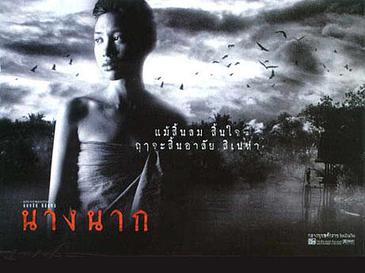
Another trope the director chose to use is bright vs. dim, moody lighting to highlight their ups and downs, from the calm and serene beginnings of Mak collecting leaves for a mobile in the bright green nature around their home, to the grey, stormy and decrepit underside of the house where Mak sees that Nak is a ghost for the first time. As although there are plenty of signs of a slasher type movie, such as Mak wielding an axe and the spear for fishing, or Nak getting revenge on the entire village, the expectations we harbor from these tropes are ultimately subverted. The locals and shaman initially try to fight Nak with violence, in fear of the same anticipation for murder that the audience may feel is imminent. But ultimately, it's revealed that the grief Nak and Mak feel of being torn back apart is the biggest, most threatening force to the village. Furthermore, it's a grief that requires patience, understanding, and a reconciliation between the dead and the living.
This is especially apparent in the last few scenes of the movie, where when the locals and the shaman are enacting their solution, it's incredibly dark and stormy. Yet when the monks from Bangkok finally arrive, the rain begins to settle, and the area is filled with a quiet, peaceful glow. In my eyes, it really highlighted the directors approval of more peaceful, non-reactive solutions, a respect for the dead, and an appreciation of family values and servitude to those you love.
Overall, I liked the movie, but I still was left unsatisfied. I felt like for a movie that emphasizes the importance of karma, we hardly return to the place of war that Mak was at near the beginning. Maybe it wasn't in the original story, but I felt like if Nak's character had been explored within the context of her potentially killing those who "deserved it" (ex: stole a ring, harassed her husband, etc.), then I had expected to see the director explore Mak's way of approaching karma within the battle as well. Instead, I felt like the director simply told us that Mak became a monk, then the significance of Nak's legacy and loyalty to him, then the film ended without explicitly returning to that initial context.
Another factor that made me feel unsatisfied was Nak's character development. Mak was more integrated into the village community, as he had friends, people he worked with side-by-side, and had ventured outside of the village. In contrast, the only cases in which we see Nak is when she's embarrassed by her husband's friends, spending time serving or with her husband, when she takes care of her child, and when she kills villagers that pose a threat to her financially or emotionally. Further more, the audience is left wondering how much of what Nak said was true vs a lie, such as the villagers spreading rumors about her. Perhaps this was on purpose, to paint Nak as more introverted and stress the important role of the community to avoid "creating ghosts", but overall I felt like she could have had more of her own life to show before her death.